The Healing Power of Nature: Why Time Outdoors Restores Your Mind, Body, and Spirit

Some posts on these blogs contain affiliate links. If you make a purchase through one of the links, I may earn a small commission which is at no additional cost to you. I only recommend products I trust, use or believe bring genuine value.
Why Spending Time in Nature Is One of the Most Powerful Things You Can Do for Your Health
If you’ve ever stepped outside feeling overwhelmed and noticed your shoulders soften almost immediately, your body was responding to something deeply biological.
In a world filled with screens, deadlines, and constant noise, spending time in nature is no longer just refreshing, it is essential. Modern life asks our nervous systems to stay alert far longer than they were ever designed to. Nature offers the counterbalance. It slows your breath, steadies your heart, and gently brings your body back into a state of balance.
Being outdoors is not a luxury or an indulgence. It is a biological need that supports physical health, emotional stability, mental clarity, and long-term well-being.
As research continues to grow, science is confirming what humans have felt intuitively for centuries: nature heals. It calms the nervous system, strengthens the immune system, supports heart health, improves sleep, and restores the parts of us that feel depleted by constant stimulation.
The Science Behind Nature and Human Health
Human beings evolved in natural environments. Our nervous systems, hormones, immune responses, and circadian rhythms are all designed to function in relationship with the natural world. Yet today, the average person spends nearly 90 percent of their time indoors, often under artificial lighting and constant digital stimulation.
This disconnection from nature is now being linked to increased rates of anxiety, depression, chronic inflammation, cardiovascular disease, and burnout. The body is simply not built to thrive without regular contact with natural environments.
The encouraging news is that reconnecting with nature does not require dramatic lifestyle changes. Even brief, intentional time outdoors can create meaningful physiological shifts that support healing and resilience.
How Nature Calms the Nervous System and Reduces Stress
One of the most immediate and noticeable benefits of being outside is its impact on stress levels. Research shows that spending as little as 20 minutes in a natural environment can significantly lower cortisol, the body’s primary stress hormone.
When you step into nature, your nervous system receives signals of safety. The sounds, textures, light, and rhythms of the natural world help shift your body out of fight-or-flight and into a parasympathetic state, often referred to as rest and restore.
This is why walking through a park, sitting near water, or resting beneath trees can feel grounding almost instantly. Your body is not being lazy or unproductive. It is recalibrating.
This calming effect is sometimes referred to as the “nature response,” a physiological settling that supports emotional regulation, clearer thinking, and a sense of inner steadiness.
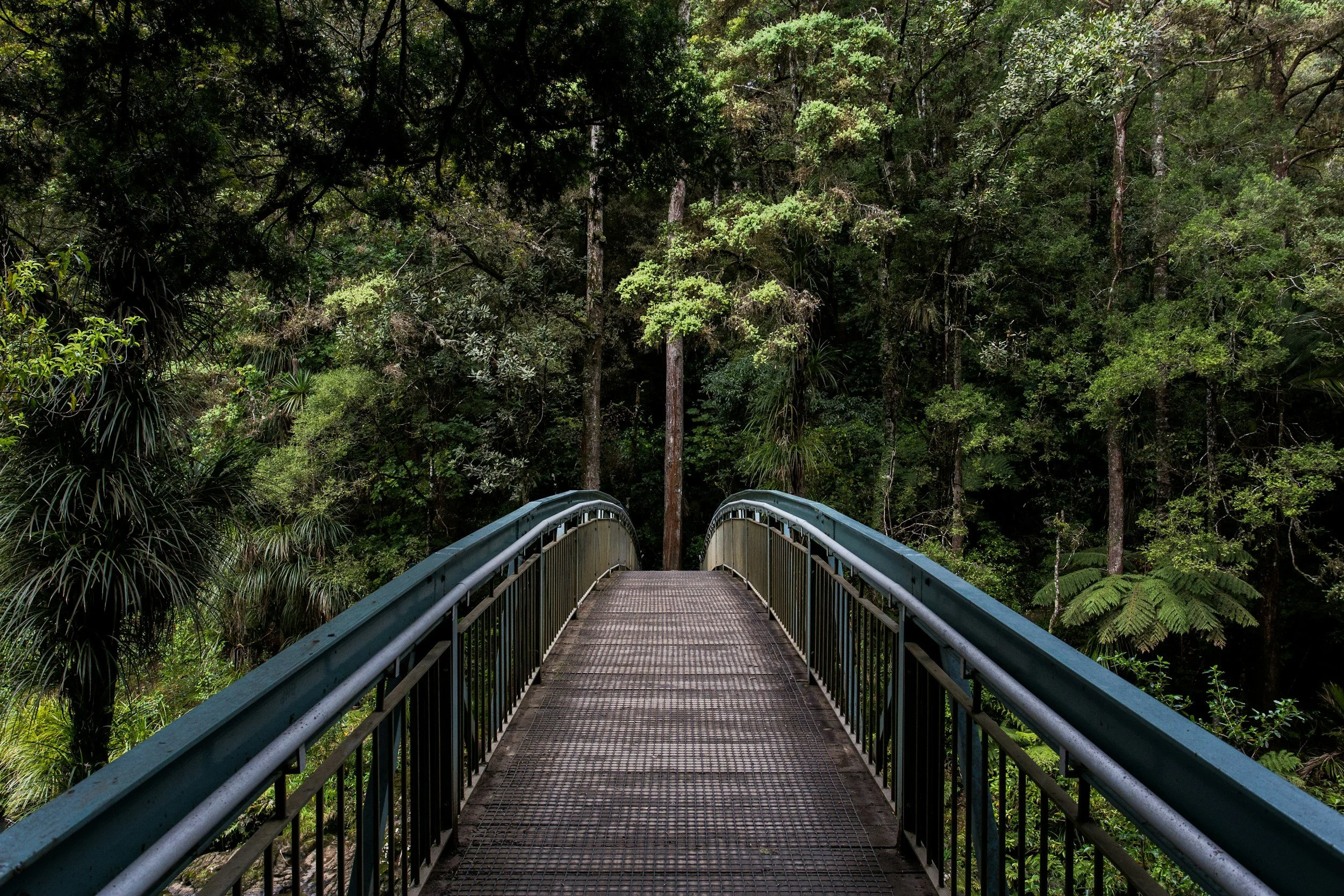
Expansive bridge across a wooded area
How Time Outdoors Strengthens the Immune System
Nature supports the immune system in ways that are both subtle and powerful. Trees and plants release natural compounds into the air that have been shown to reduce inflammation and increase the activity of immune cells responsible for fighting illness.
When you breathe outdoor air, especially in green spaces, your body absorbs these compounds, which support immune function at a cellular level. This may help explain why people who spend more time outdoors tend to experience fewer stress-related illnesses and recover more efficiently.
This immune support is not limited to forests or wilderness areas. Even urban parks, gardens, and tree-lined streets offer measurable benefits.
Nature’s Impact on Mental Health and Emotional Well-Being
Spending time in nature has a profound effect on mental health. Natural environments reduce anxiety, lift low moods, and help regulate emotional overwhelm by gently drawing your attention back into the present moment.
One of the key mental health benefits of nature is its ability to reduce rumination, the repetitive negative thought patterns often associated with anxiety and depression. When you are surrounded by natural elements, your brain shifts out of problem-solving mode and into sensory awareness.
This sensory engagement creates mental spaciousness. Instead of looping through worries, your attention settles on what you see, hear, feel, and smell. Over time, this supports emotional resilience and greater psychological flexibility.
How Nature Improves Focus, Cognition, and Creativity
Modern life places constant demands on attention. Notifications, multitasking, and screen exposure exhaust the brain’s ability to focus. Nature provides a restorative reset for these overworked attention systems.
Time outdoors allows the brain to rest from directed attention and engage in what researchers call “soft fascination.” This gentle engagement restores cognitive resources, improving focus, memory, and problem-solving abilities.
This is why many people feel clearer, more creative, and more capable after spending time outside. Children who regularly play outdoors show improved emotional regulation and attention spans, and adults experience similar benefits.
Even a short walk outside can help you return to tasks with renewed clarity and insight.
The Role of Nature in Heart Health and Inflammation Reduction
Chronic stress and inflammation are major contributors to cardiovascular disease. Nature addresses both.
Regular exposure to natural environments has been linked to healthier blood pressure, improved heart rate variability, and reduced systemic inflammation. These effects are largely due to the calming influence nature has on the autonomic nervous system.
Gentle outdoor movement, such as walking, also supports circulation and cardiovascular endurance without placing excessive strain on the body. Over time, this contributes to improved heart health, energy levels, and overall vitality.
How Natural Light Supports Sleep and Hormonal Balance
Natural light plays a crucial role in regulating the body’s internal clock. Morning sunlight signals the brain to reduce melatonin and increase alertness, while exposure to daylight throughout the day helps regulate nighttime sleep cycles.
Spending time outdoors, especially earlier in the day, supports better sleep quality, balanced hormones, and more consistent energy levels. Artificial lighting cannot replicate the full-spectrum benefits of natural light.
This connection between nature and circadian rhythm is one of the simplest yet most powerful ways to support long-term health.
Nature Is Not Just a Place, It Is a Prescription for Well-Being
The benefits of spending time in nature are not abstract or optional. They are rooted in biology. Human bodies are designed to respond positively to natural environments, and we suffer when we are deprived of them.
You do not need to escape to a remote forest or hike a mountain to experience these benefits. Nature can be found in simple, accessible ways:
Walking in a local park
Sitting under a tree
Tending a small garden
Standing outside for a few mindful breaths
Watching the sky change at sunset
What matters is intention and consistency, not perfection.
The more you allow nature to be part of your daily rhythm, the more grounded, calm, and resilient you will feel. Nature is not asking you to do more. It is inviting you to return to what your body already knows.
A Gentle Invitation
If this resonated with you, I invite you to stay connected.
Join my email list for gentle mindfulness practices, nervous system support, journaling prompts, and grounded reflections to help you create a calmer, more intentional life.
Nature reminds us that healing does not require force. Sometimes it simply requires stepping outside and letting yourself be restored.