Meet Your Inner Critic: A Gentle, Soulful Guide to Turning Self-Doubt into Self-Compassion

Some posts on these blogs contain affiliate links. If you make a purchase through one of the links, I may earn a small commission which is at no additional cost to you. I only recommend products I trust, use or believe bring genuine value.
Meet Your Inner Critic: How Mindfulness Helps You Quiet Self-Doubt and Reclaim Your Inner Voice
You know that voice.
The one that shows up the moment you want to try something new, speak from your heart, or step outside what feels familiar. It whispers things like, “You’re not good enough,” or “Who do you think you are?” It questions your worth, second-guesses your decisions, and often sounds uncannily like someone you once tried very hard to please.
That voice is your inner critic.
For many of us, it becomes such a constant presence that we barely notice it anymore. It hums quietly in the background of our lives, shaping how we show up, what risks we take, and how much space we allow ourselves to occupy.
But here is the most important truth to remember:
You are not that voice. You are the one who hears it.
For many women navigating expectations, responsibilities, comparison, and the pressure to be everything for everyone, the inner critic becomes a protective but deeply limiting companion. Mindfulness does not try to silence that voice by force. Instead, it teaches you how to listen differently. It shows you how to pause, notice, and respond with compassion rather than collapse into shame.
This guide invites you to meet your inner critic with awareness, not resistance. To use mindfulness not as a weapon, but as a soft place to land. A way to return to the truth of who you are: whole, worthy, and deeply human.
Understanding the Inner Critic with Compassion
Before you can quiet the inner critic, it helps to understand where it comes from.
This voice is not your enemy. It is not a flaw in your personality. It is usually a younger part of you that learned to speak in sharp tones out of fear. At some point in your life, being critical may have helped you stay safe, avoid rejection, gain approval, or minimize disappointment.
Common origins of the inner critic include:
Growing up with high expectations or conditional praise
Experiencing criticism, comparison, or emotional inconsistency
Learning that love or safety had to be earned
Being rewarded for perfection or compliance
Navigating environments where mistakes felt unsafe
Over time, these external messages became internalized. The voice moved inside and began repeating the same warnings long after you outgrew the situations that created them.
The inner critic often reacts from old fear rather than present truth. It is afraid of failure. Afraid of being seen. Afraid of being rejected. Afraid that if it loosens its grip, something bad will happen.
When it speaks, it is often trying to protect you, even if the method feels harsh.
Mindfulness allows you to see this clearly. Instead of believing every critical thought, you begin to notice the voice as a pattern rather than a fact. You can gently ask yourself:
Where did this belief come from?
Whose voice does this sound like?
What is this part of me afraid of?
Is this thought true, or is it simply familiar?
This shift—from judgment to curiosity—is where healing begins.
Why the Inner Critic Feels So Convincing
The inner critic feels powerful because it is tied to the nervous system. When it speaks, your body often responds as if there is real danger.
You might notice:
Tightness in your chest or throat
Shallow breathing
A sinking feeling in your stomach
A rush of anxiety or shame
The urge to withdraw, overwork, or self-sabotage
This happens because critical thoughts activate the brain’s threat system. The nervous system cannot always tell the difference between an external threat and an internal one. A harsh thought can trigger the same stress response as an actual danger.
When this happens repeatedly, the inner critic becomes louder during moments of vulnerability, change, or growth. Any time you stretch beyond the familiar, it interprets that expansion as risk.
Understanding this helps you stop personalizing the voice. It is not proof that you are failing. It is a sign that your nervous system is trying to protect you using outdated strategies.
How Mindfulness Helps Quiet the Noise
The inner critic thrives when you are overwhelmed, disconnected, or moving through life on autopilot. Mindfulness interrupts that cycle.
Mindfulness is not about having a perfectly calm mind. It is about noticing what is happening inside of you without becoming consumed by it.
When the inner critic begins to speak, mindfulness creates a pause. That pause is everything.
Instead of:
“I am a failure.”
Mindfulness allows:
“I’m noticing the critical voice is here right now.”
That subtle shift changes the entire experience. You move from being inside the thought to observing it.
When you anchor into the present moment, through your breath, your posture, or the sensation of your feet on the floor, you send a signal of safety to your nervous system. The body softens. The stress response eases. Clarity returns.
Over time, mindfulness strengthens the parts of the brain responsible for:
Emotional regulation
Perspective and reasoning
Self-compassion
Conscious choice rather than reaction
You stop automatically believing every thought you have. You learn to respond instead of react. The inner critic begins to lose its authority, not because you fight it, but because you no longer hand it the microphone.
Mindfulness Practices to Gently Quiet Your Inner Critic
Silencing the inner critic does not require force or discipline. It requires gentleness, presence, and consistency. These practices help you slowly turn down the volume on self-criticism while strengthening your inner compassion.
1. The Mindful Pause
When you notice self-criticism rising, pause.
Take one slow inhale through your nose.
Hold briefly.
Exhale gently through your mouth.
Ask yourself quietly:
“What do I need right now?”
Often the answer is rest, reassurance, or kindness, not more pressure.
2. Name the Voice Without Becoming It
Language matters. Try shifting from identification to observation.
Instead of:
“I’m such a perfectionist.”
“I’m so hard on myself.”
Try:
“My perfectionist voice is showing up.”
“The inner critic is active right now.”
I’ve created a printable journal called 30 Days of Mindful Living | Gentle Daily Practices to Reconnect With Yourself | Printable Wellness Guide for people who want to begin a practice but don’t know where to start. It offers one simple, gentle practice for each day over 30 days, helping participants build consistency and reconnect with themselves at their own pace.
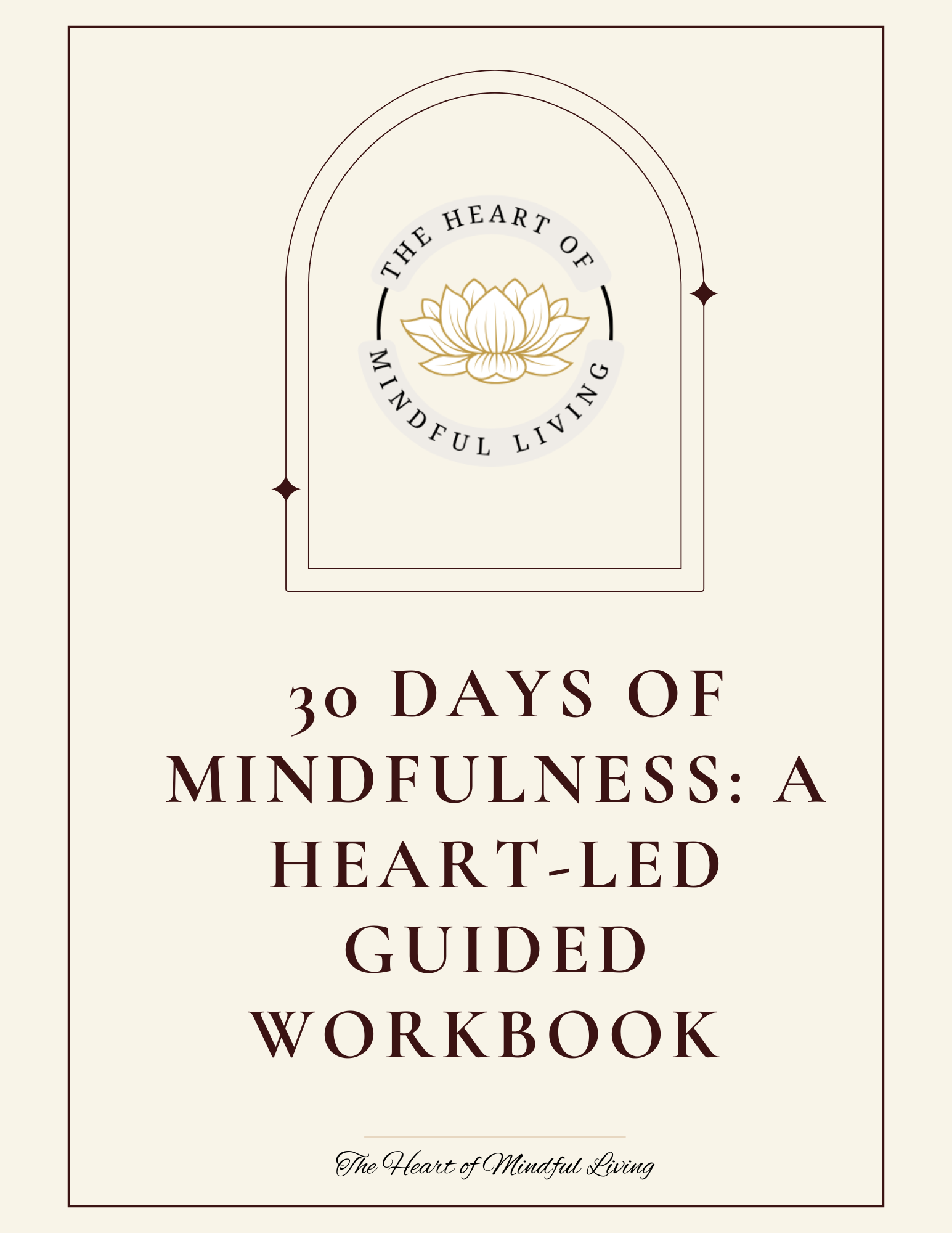
You can visit the store on this website for more information about this printable journal.
This creates space. You are no longer the voice. You are the one noticing it.
3. Ground in the Body
Self-criticism pulls you into the mind. The body brings you back to the present.
Try grounding through:
Feeling your feet on the floor
Placing a hand on your heart or belly
Noticing five things you can see
Taking slow, intentional breaths
Grounding tells your nervous system that you are safe right now.
4. Invite the Inner Mentor
Within you exists another voice, the wise, steady, compassionate part of you.
Imagine what this inner mentor would say:
Calm
Honest
Supportive
Realistic, not harsh
Let this voice respond to the inner critic. Over time, this becomes the voice you trust.
5. Mindful Journaling for Reframing
Journaling helps externalize the critic and soften its grip.
Try prompts like:
What is my inner critic afraid would happen if it stayed quiet?
What is the truth I want to practice instead?
How would I speak to a friend feeling this way?
This is why the Five Minute Reset Journal was created.
It is intentionally short, gentle, and supportive. It respects the reality of busy lives while still honoring the importance of self-connection.
Five minutes is enough to:
Breathe consciously
Reflect with intention
Ground yourself emotionally
Shift your mindset
Consistency matters far more than duration. A simple practice you return to daily will support you more than a perfect routine you abandon after a week. You can take a look at my printable journal by following the link to my store: The 5-Minute Morning Reset Journal. This printable journal is designed for anyone who wants to begin a journaling practice but isn’t sure where to start, or for seasoned journalers looking for a simple reset, or for those who don’t have much time in the morning yet still want to incorporate mindfulness into their day. Each page includes one heart-led prompt and can be completed in five minutes or less. The journal is 65 pages long, making it an easy, supportive way to build a consistent morning practice.

Visit the link below to learn more about this supportive printable journal.
Writing turns unconscious patterns into conscious choice.
6. Self-Compassion Meditation
Even a few minutes of self-compassion can shift your internal environment.
Repeat silently:
“May I be kind to myself in this moment.”
“May I feel safe enough to be imperfect.”
“May I remember that I am human.”
This practice regulates the nervous system and creates emotional safety.
What Happens When You Stop Believing the Inner Critic
When the inner critic no longer runs the show, something remarkable happens.
You begin to:
Take healthier risks
Speak more honestly
Rest without guilt
Set boundaries with less explanation
Trust yourself more deeply
The critic may still appear, but it no longer defines you. It becomes background noise rather than a command.
This is not about becoming fearless. It is about becoming self-trusting.
A Gentle Truth to Carry With You
You are not the voice that tells you you are too much or not enough.
You are the one who notices that voice and chooses something truer.
Your beliefs are not fixed. They are learned patterns, and patterns can change. Every mindful pause, every compassionate breath, every moment of awareness creates space for a new internal story to take root.
You are allowed to outgrow old narratives.
You are allowed to soften.
You are allowed to become kinder to yourself.
You are not broken.
You are becoming.
And mindfulness is simply the practice of walking yourself home, one gentle moment at a time.
If this resonated with you, I invite you to stay connected.
Join my email list for gentle mindfulness practices, journaling prompts, and heart-centered reflections to support self-compassion, emotional healing, and inner calm.