Which Journaling Techniques Support Self-Reflection and Personal Growth?

Some posts on these blogs contain affiliate links. If you make a purchase through one of the links, I may earn a small commission which is at no additional cost to you. I only recommend products I trust, use or believe bring genuine value.
Journaling is one of the most grounding and emotionally healing practices we can offer ourselves.
It creates a safe, private space to slow down, breathe, and reconnect with what’s happening inside us, especially when life feels overwhelming or noisy.
For many people, journaling is misunderstood as simply writing about what happened during the day. While that can be helpful, there are actually many different types of journaling, each supporting emotional wellbeing in its own unique way. When we understand these different journaling styles, we give ourselves permission to choose what truly meets us where we are, rather than forcing ourselves into a practice that does not fit our energy or season of life.
That freedom alone can make journaling feel more nourishing, sustainable, and supportive instead of another task on the to-do list.
One of the Most Powerful Types of Journaling: Flow of Consciousness
One of the most powerful and often most accessible journaling styles is flow of consciousness journaling.
This practice invites you to write continuously, without editing, censoring, or worrying about grammar, structure, or doing it right. You simply let your thoughts move onto the page exactly as they arrive.
Flow of consciousness journaling is especially helpful when:
Your thoughts feel tangled or overwhelming
Emotions feel heavy but hard to name
You are holding stress in your body
You need emotional release rather than reflection
There are no rules with this journaling technique.
No pressure.
No expectations.
Just honesty, presence, and release.
Over time, this style of journaling can gently support emotional processing, nervous system calming, greater self-awareness, and a deeper connection to your inner voice.
It is one of the simplest forms of journaling and often one of the most healing.
Why the Right Journal Matters for This Practice
Because flow of consciousness journaling is meant to be open and uninterrupted, the journal you use truly matters.
When your pages invite you to keep going rather than pause, hesitate, or self-edit, it becomes much easier to stay in the flow. That is why I am excited to share a journal that feels intentionally designed to hold your thoughts, not rush them.
I recently found two stunning, richly designed journals that feel perfect for this kind of writing. They are hard-cover and supportive to write in anywhere, beautifully lined without feeling restrictive, and designed to help you turn the page without hesitation.
As a bonus, they are very affordable.
They are genuinely gorgeous, and while the photos are lovely, they do not fully capture how grounding and special they feel in your hands. These are the kind of journals that quietly invite you to sit down, take a breath, and let your words flow exactly as they are meant to.
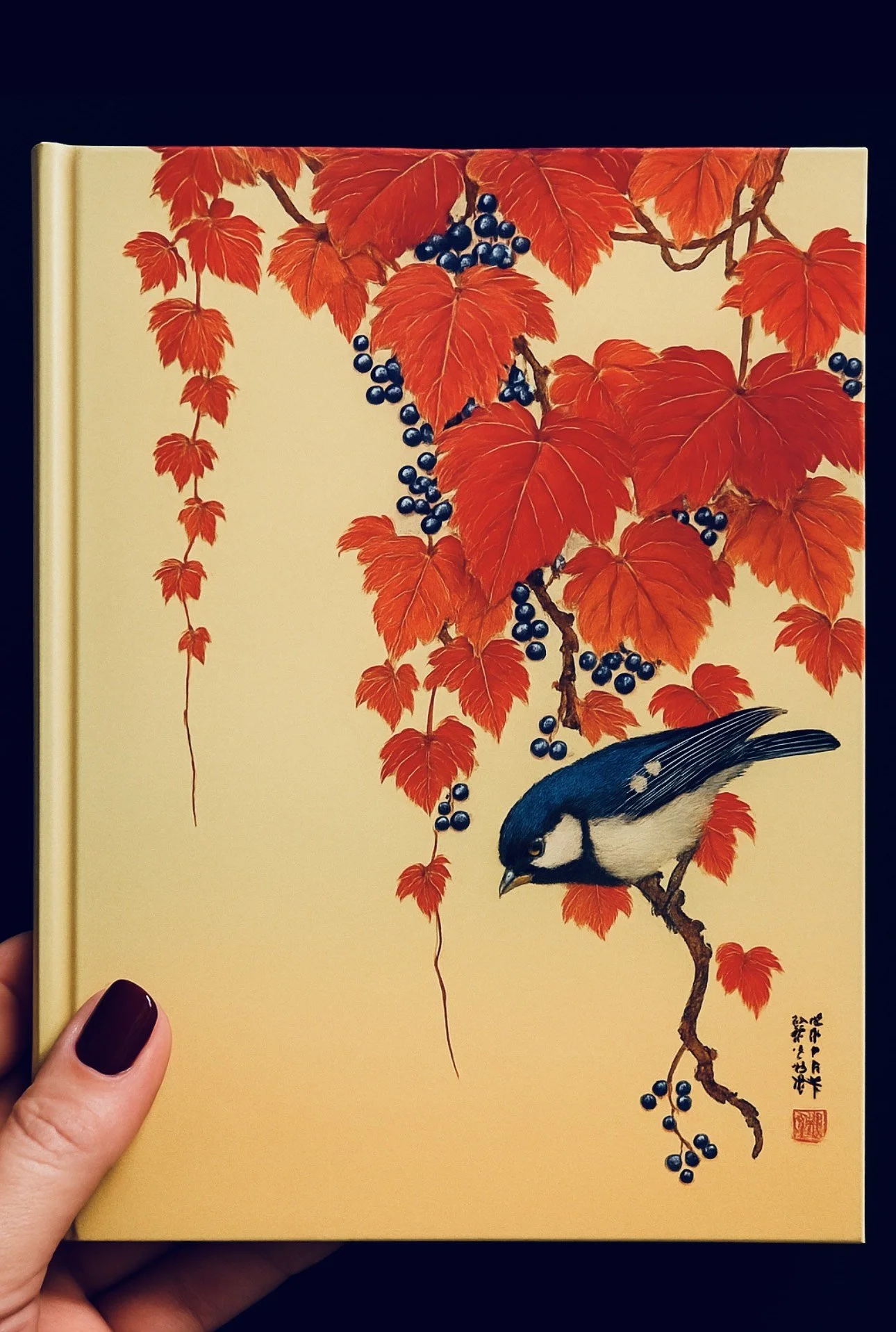
This is the Bird and Red Ivy Journal. It can easily be used as a notebook as well.

As you can see, the journal pages are beautifully designed. There is a silk page holder, which makes the perfect addition.
Seeing Your Thoughts on the Page Creates Clarity
When you see your thoughts written out in front of you, something shifts. What once felt overwhelming in your mind often becomes more manageable on the page. Patterns begin to emerge. Clarity feels closer, and solutions do not feel quite so far away.
Writing slows the mind just enough to help you notice what is really happening beneath the surface. Instead of thoughts looping endlessly, they have somewhere to land. This is one of the reasons journaling can feel so regulating for the nervous system. It gives your inner world structure without forcing it.
This kind of brief, consistent writing practice can be just as impactful as longer journaling sessions. What matters most is not how much you write, but how present you are while writing.
Gratitude Journaling as a Grounding Practice
Another deeply meaningful approach to journaling is gratitude journaling.
Gratitude journaling focuses on writing down moments, people, sensations, or experiences that bring comfort, steadiness, or quiet joy. Over time, this practice gently shifts the mind away from constant stress scanning and toward awareness of what is already supporting you.
Many people hesitate to try gratitude journaling because they believe gratitude needs to be big or profound. There is often an unspoken pressure to name something life-changing or extraordinary. But gratitude does not work that way.
Most of the time, gratitude lives in very small moments.
It might be gratitude for waking up today.
For a warm cup of coffee.
For a moment of quiet before the day begins.
For your body carrying you through another day, even if it feels tired.
This practice teaches us to notice the small, steady supports that often go unseen. When practiced regularly, gratitude journaling can help retrain the brain to recognize safety, goodness, and stability, even during challenging seasons.
How Gratitude Journaling Supports Emotional Wellbeing
Gratitude journaling is not about pretending everything is fine or forcing positivity. It is about widening your awareness so that difficult emotions are not the only thing your nervous system is tracking.
Over time, gratitude journaling can support emotional resilience during stressful periods, a greater sense of grounding and presence, improved emotional regulation, a more compassionate inner dialogue, and increased awareness of daily support and safety.
For people who feel overwhelmed, disconnected, or emotionally drained, gratitude journaling can feel especially stabilizing. It offers a way to reconnect with life gently, without needing to analyze or fix anything.
This makes it a beautiful choice for anyone navigating burnout, anxiety, or emotional fatigue.
Making Gratitude Journaling Feel Accessible
Gratitude journaling works best when it feels approachable, not forced. A few simple prompts can be enough to begin.
You might reflect on one small thing that brought comfort today, one moment that felt steady or calm, or one person, place, or experience you appreciate right now.
You do not need to write long entries. A sentence or two is often enough. What matters is the act of noticing and naming what supported you.
Some people prefer structured journals for this practice because the prompts remove the pressure of knowing what to write. Others enjoy open-ended pages where gratitude can flow freely. There is no right approach, only what feels supportive to you.
One of my personal favorite gratitude journals is one I return to again and again because the design itself feels grounding. The cover has a subtle texture, and the layout invites reflection without feeling overwhelming. The way a journal feels in your hands can matter more than we realize. When something feels inviting, it becomes easier to return to the practice.
Choosing the Journaling Style That Meets You Where You Are
Whether you are drawn to flow of consciousness journaling, gratitude journaling, or a short daily reset practice, the most important thing is choosing a style that aligns with your current energy and emotional capacity.
Journaling is not meant to be rigid. It is meant to support you.
Some days call for release.
Some days call for reflection.
Some days call for simple presence.
When you allow yourself that flexibility, journaling becomes less about discipline and more about care. Over time, this creates a relationship with yourself that feels steady, compassionate, and deeply grounding.
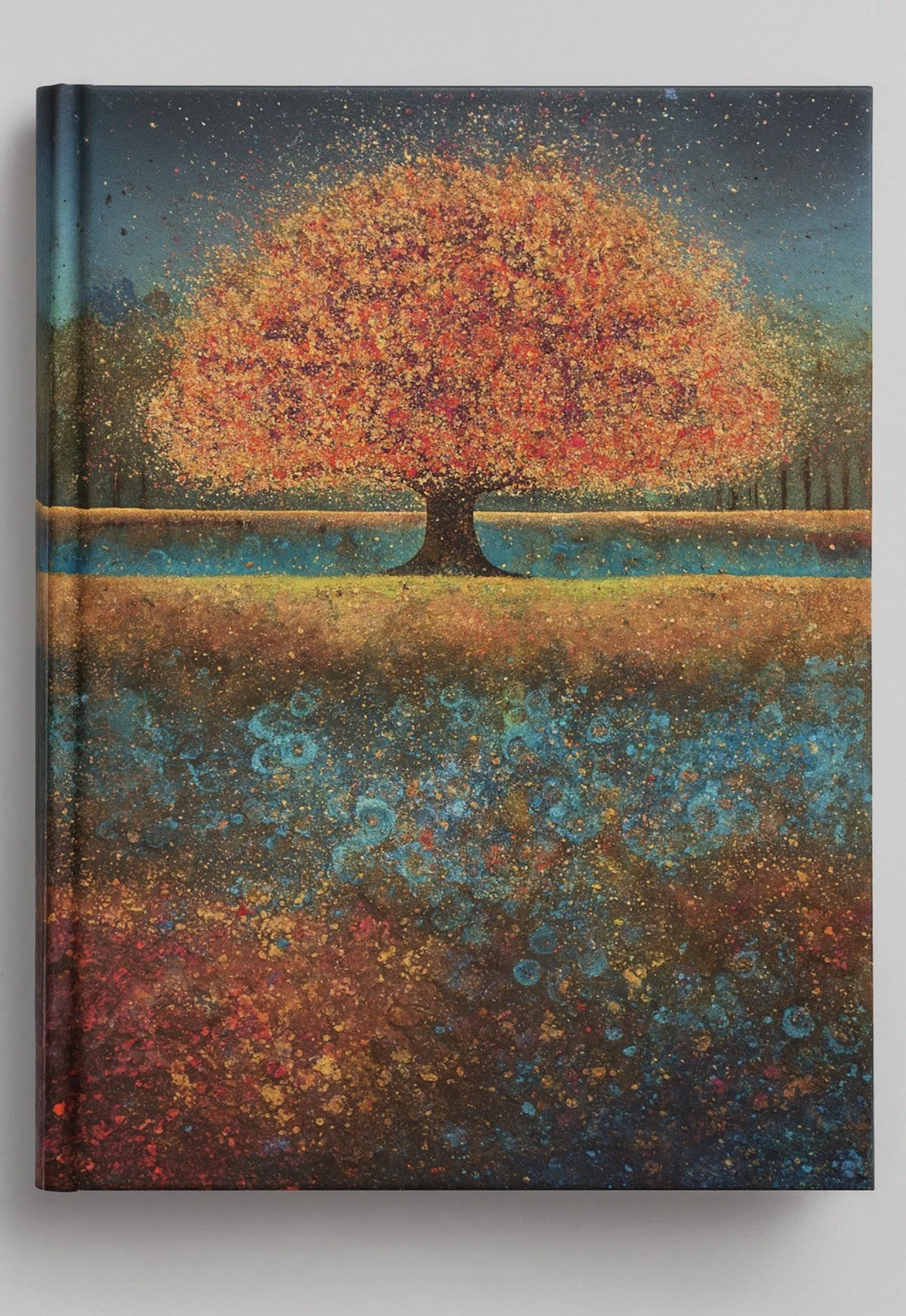
This is the Tree of Dreams Journal which is beautifully designed.
Reflective Journaling for Self-Awareness and Growth
Reflective journaling is another powerful and deeply supportive journaling method.
With reflective journaling, you intentionally slow down and look back on your experiences, emotions, and choices. Rather than rushing forward or trying to fix anything, you give yourself space to gently explore what those moments may have taught you. This practice is less about judging or analyzing and more about noticing, understanding, and softening toward yourself.
Reflective journaling helps build self-awareness by allowing you to observe your inner responses with curiosity instead of criticism. You may begin to notice patterns in how you react, what feels nourishing, and what no longer aligns. Over time, this awareness can support more intentional choices and a deeper sense of emotional clarity.
This style of journaling can feel especially comforting during seasons of growth, transition, or uncertainty. When you are trying to make sense of where you have been and where you are headed, reflective journaling offers a steady place to land. It becomes a way to honor what you have learned while still nurturing a kinder, more compassionate relationship with yourself.
Some people find it helpful to reflect on questions such as what felt meaningful today, what challenged me, or what I am beginning to understand about myself. There is no need to search for perfect answers. The value is in the noticing.
Dream Journaling and the Language of the Subconscious
Journaling your dreams is a powerful way to deepen self-awareness and connect with your inner world.
When you write down your dreams, ideally soon after waking, you begin to notice patterns, emotions, and symbols that often go unnoticed in waking life. Dreams can carry emotional themes, unresolved questions, or creative imagery that speaks in a different language than logic or reason.
Dream journaling can support greater emotional insight, increased creativity, stronger intuitive awareness, and a deeper understanding of recurring themes in your life.
Over time, this practice can become a gentle morning ritual, one that invites you to slow down and listen inward before the day fully begins. Sometimes dreams are spaces where the mind works through problems or explores possibilities that feel harder to access while awake. Other times, they simply offer emotional release or imaginative expression.
Throughout history, many artists, writers, musicians, and creatives have drawn inspiration from their dreams, allowing them to shape ideas that may never have emerged otherwise. Even if you do not consider yourself creative, dream journaling can still be a meaningful way to explore the quieter layers of your inner experience.
To support this practice, I created a 75-page printable Dream Journal, available on my website, Nightfall Dream Journal | Printable 75-Page Dream Journal PDF for Tracking Dreams & Insights, The Heart of Mindful Living. Each page offers generous space to record your dreams along with room to reflect on emotions, symbols, or insights that stand out. This journal is designed to be a gentle daily companion, supporting self-awareness, creativity, and connection to your inner world without pressure or expectation.
Prompt-Guided Journaling for Gentle Structure
Prompt-guided journaling is another popular and supportive option.
This approach is especially helpful for anyone who wants to journal but sometimes struggles to know where to begin. Prompts offer simple, grounding starting points that gently guide your attention inward.
Examples of prompts might include what am I feeling today, what do I need in this moment, what has been weighing on my mind lately, or what feels supportive or nourishing right now.
These kinds of questions help open the door to deeper thoughts and emotions in a way that feels structured but not restrictive. Prompt-guided journaling removes the pressure of coming up with ideas on your own and allows you to ease into reflection at your own pace.
This style of journaling is especially well suited for busy people, beginners, or anyone who appreciates a bit of guidance. It helps journaling feel more approachable, comforting, and easier to return to consistently, even on days when mental energy feels low.
Over time, prompt-guided journaling can become a reliable anchor, offering steady moments of connection and clarity within the flow of everyday life.

Intention Journaling for Clarity and Direction
Another form of journaling that has grown in popularity is intention journaling.
This practice focuses on writing down how you want to feel and the energy you want to carry into your day. Rather than focusing on what needs to be accomplished, intention journaling centers on how you want to move through your life. It invites awareness, presence, and choice.
Intention journaling is especially powerful when practiced in the morning, as it helps set the emotional and mental tone for the day ahead. By naming your intentions early, you create a sense of clarity and focus that can gently guide your actions, decisions, and interactions.
When practiced consistently, intention journaling strengthens the connection between your mindset and your goals. Over time, this creates a quiet sense of empowerment. You begin to move through your days with more purpose, self-trust, and alignment, even when life feels unpredictable.
Finding the Journaling Style That Supports You
Each journaling style offers something unique. Some forms of journaling help release emotion. Others cultivate gratitude, clarity, or self-awareness. Some invite reflection, while others encourage creativity or intention.
When you allow yourself to explore different types of journaling, you begin to discover what truly supports you in each season of your life. What feels grounding today may change over time, and that flexibility is part of the beauty of the practice.
There is no perfect technique and no correct structure. Your journal is not a test or a performance. It is a companion, a mirror, and a safe place to grow. What matters most is that the practice feels honest, supportive, and nurturing.
Journaling is ultimately a journey of coming home to yourself. Whether you write freely, respond to prompts, reflect on your experiences, record your dreams, or set intentions for the day, each word becomes a step toward deeper understanding and greater peace.
As you explore the many types of journaling, may you find the style that invites you to breathe more fully, listen more gently, and connect more deeply with who you are becoming.
If you’d like monthly tips on meditation, journaling prompts, affirmations, and mindful living practices, you’re welcome to join my email list.